

.png)
Learn how presales is evolving and howyour team can stay ahead in atech-driven sales landscape.

The AE walks into discovery knowing almost nothing.
"Demo request" is all the calendar invite says. They run a generic opener, ask the same five questions, and hope something lands. If they're lucky, something does. Usually, it doesn't — and they spend the first twenty minutes of a thirty-minute call establishing context that the prospect could have given them in advance, if anyone had thought to ask.
This is the default. And it's a design failure, not a sales problem.
The qualification work that happens in discovery doesn't have to happen in discovery. A well-built demo — structured around branching paths, real product interaction, and AI-powered personalisation — can do most of that work before the AE opens their mouth. The buyer tells you who they are, what they care about, and how deep they're willing to go. They just do it inside a product experience instead of a form.
Here's how that works in practice.
When a prospect submits a demo request, the standard response is a calendar confirmation. You get their name and company. They get a meeting time. Neither of you learns anything useful before you're face to face.
The alternative: instead of a confirmation email, the prospect receives a qualification demo. Not a recorded walkthrough. Not a slide deck. A live, interactive product experience built around choices.

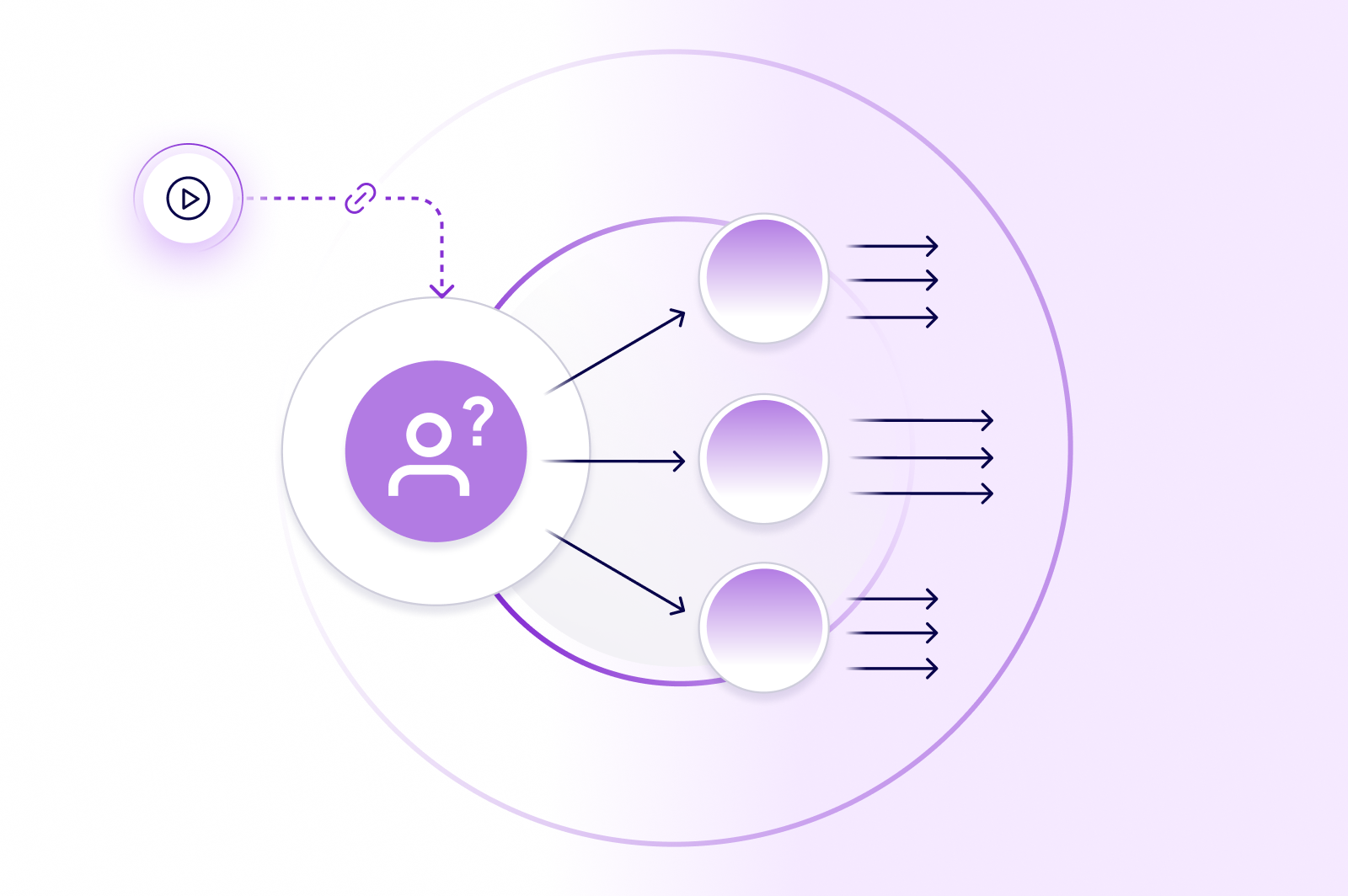
This is where Demoboost's CYOJ (Choose Your Own Journey) branching and Demo Menu come in. The prospect lands in a structured flow and immediately encounters a fork: What's your primary challenge? Which team are you buying for? Where are you in the process? They're not answering a survey. They're navigating a product — picking a path, exploring a use case, making decisions about what they want to see.
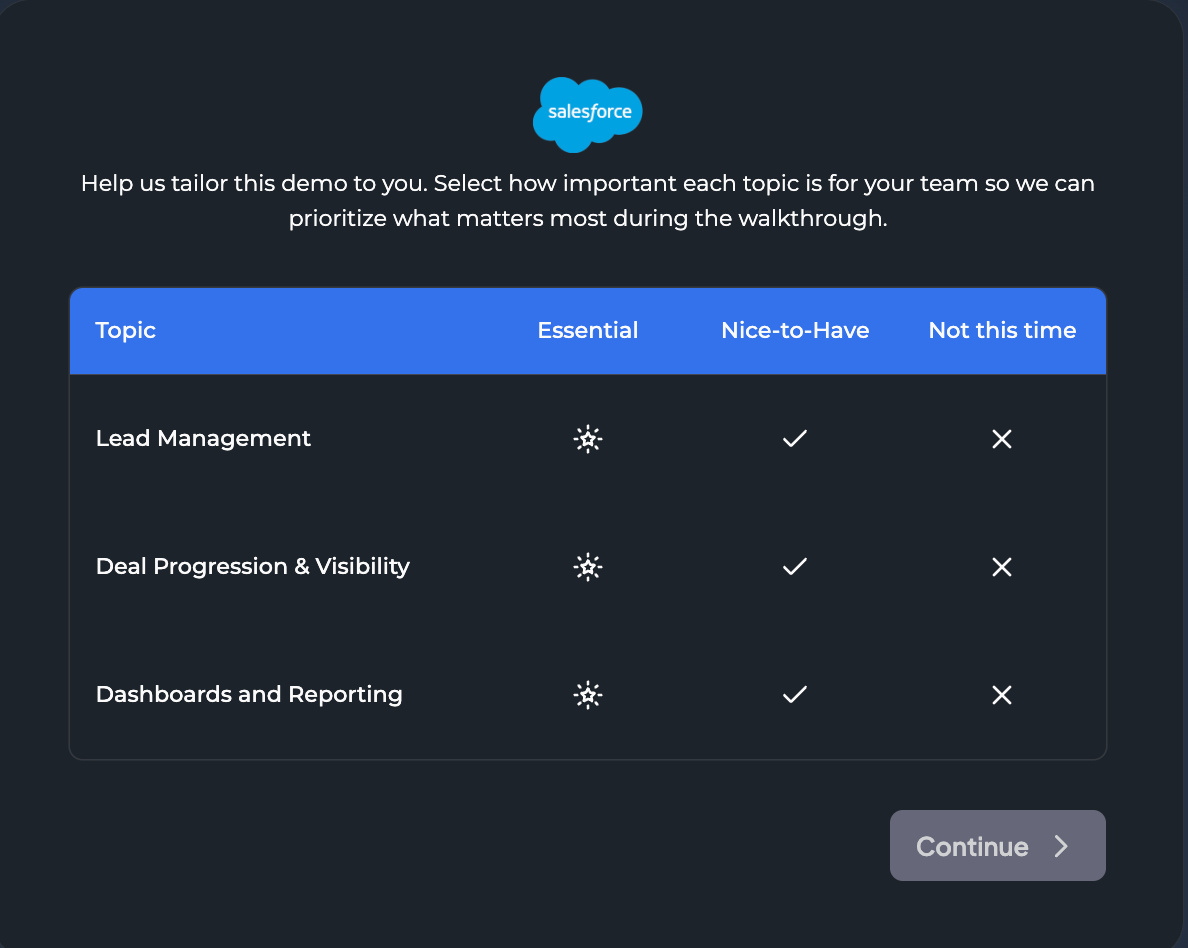
The Demo Menu is the architecture that makes this possible. Rather than a single linear walkthrough, you build a menu of entry points: each one a distinct path through the product, each one tuned to a different buyer context. The prospect self-selects. They tell you — through behaviour, not words — exactly who they are and what they need.
This distinction matters. Qualification isn't something a demo does to a buyer. It's something the buyer does for themselves, when you give them the right structure to do it.
The path a buyer takes through a Demo Menu isn't just a navigation choice. It's a signal.
Demoboost reads the engagement in real time: which branch they entered, how long they spent on each step, what they skipped, whether they came back for a second look. By the time the AE joins the discovery call, they're not starting from zero. They're starting from a behavioural portrait of a buyer who has already told them — through action — what matters to them.
Lead Analytics is the record of that portrait. It captures the engagement data generated by every interaction inside the demo flow and surfaces it in a format the AE can actually use before the call. Not a form score. Not a lead grade based on job title and company size. A real signal from a real product experience: this person spent eight minutes on the ROI module, skipped the enterprise admin section entirely, and came back to the integrations page twice.
That's not a lead. That's a conversation brief.

The shift this creates in discovery is significant. When the AE already knows the use case, the depth of engagement, and which parts of the product held attention, the call doesn't feel like a first conversation. It feels like a third one. The groundwork is done. What's left is confirmation, depth, and deal mechanics — not re-establishing who the buyer is and what they're trying to solve.
This is what Demo Qualified Lead (DQL) means in practice. The demo doesn't just convert — it qualifies. And by the time it hands off to sales, both sides of the table know more than they would have after a standard cold discovery call.
Here's where the economics of this approach used to break down.
Building a qualification demo with multiple CYOJ branches — each one feeling genuinely relevant to a different buyer context — takes time. A lot of it. For every new persona, industry, or use case, someone had to build a new flow, adapt the screens, rewrite the copy, and record new narration. The result was either a generic demo that tried to speak to everyone (and resonated with no one), or an unsustainable production burden on the presales team.
AI changes that calculation at every stage of the build.
Persona and industry-based storyboards. Rather than adapting a generic flow after the fact, teams now build distinct demo narratives organised by persona, industry, or use case from the start. Each branch of the qualification flow is a structured story — not a repurposed version of the same generic demo with a different logo in the corner.
Prompt-based screen editing. Any visual element inside a demo can be updated using plain language. Updating a headline, swapping a metric, adjusting a layout for a specific buyer context — it happens in a prompt, not through manual screen-by-screen editing. The AE doesn't need to go back to the SE every time a prospect's context changes.
Synthetic data and contextual adaptation. The moment a prospect sees placeholder numbers that bear no resemblance to their world, the demo loses credibility. AI-assisted screen editing lets teams swap in industry-relevant figures and contextually appropriate metrics — without developer access. The buyer in financial services sees different numbers than the buyer in logistics. Both see a demo that feels like it was built for them.
AI-assisted guide refinement. The narrative layer of the demo — the guides, tooltips, and contextual copy that walk a buyer through the story — can be drafted and then sharpened using AI. The SE contributes the presales expertise. AI handles the polish, the tone, and the consistency across branches.
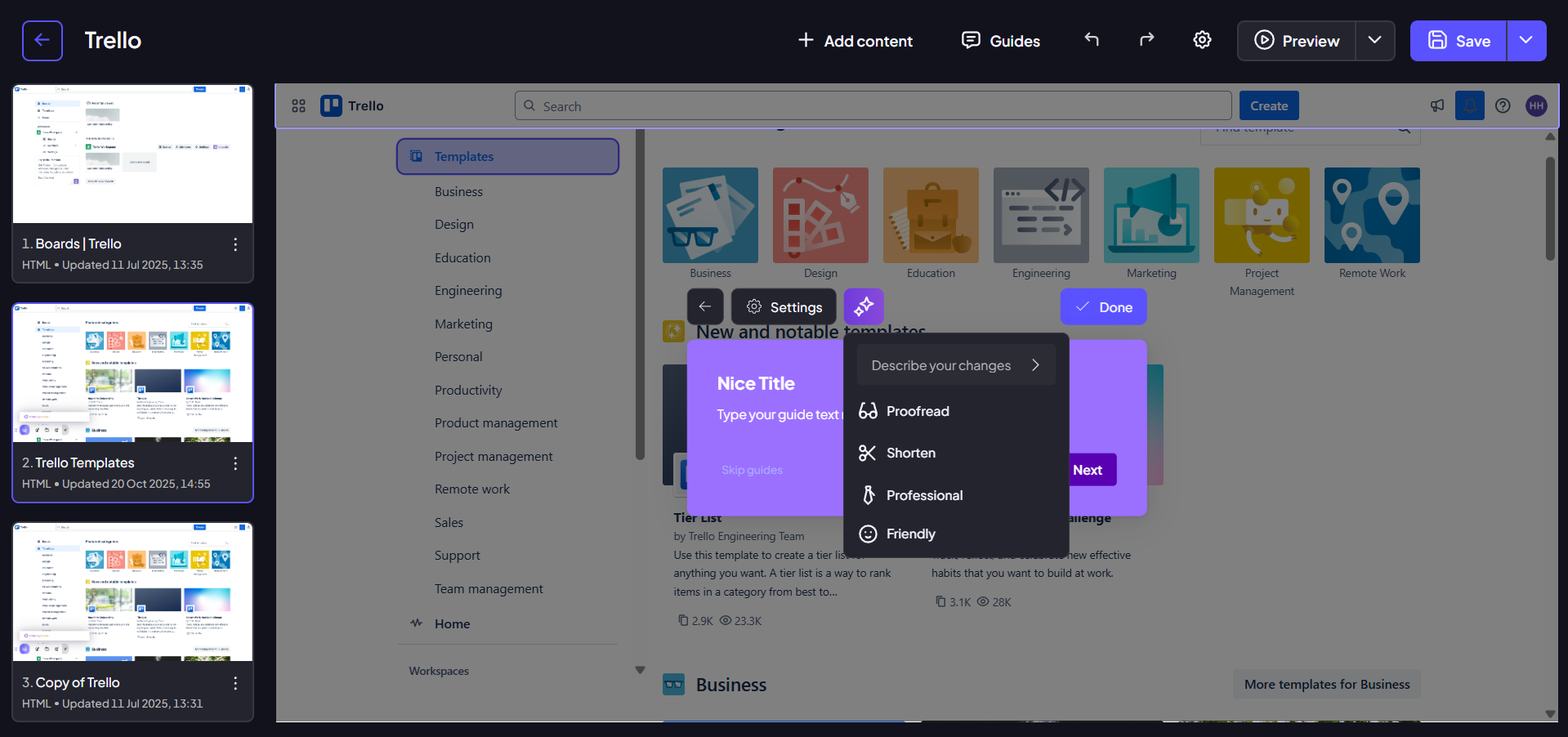
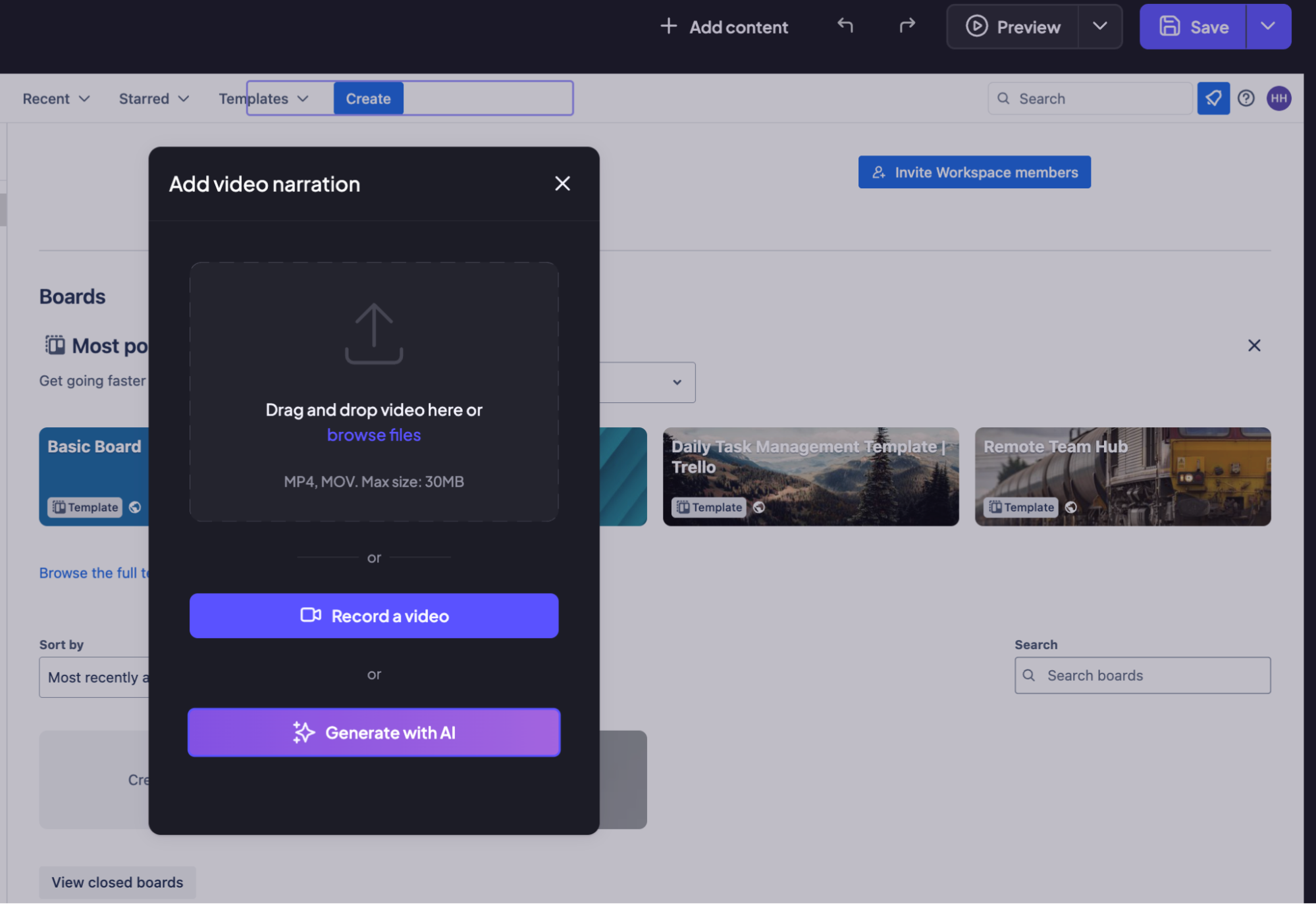
AI narration. For async distribution of the qualification demo — which is exactly the use case we're describing here — professional narration can be generated using AI avatar providers rather than recorded walkthroughs. Consistent, on-brand, available at scale, and not dependent on anyone finding forty minutes in their calendar to record a voiceover.
Multilingual delivery. A qualification demo built for one market can be adapted across 170+ languages from a single template. The same flow that works for a prospect in London works for one in Tokyo or São Paulo — without a separate production effort for each region.
None of these are bells and whistles. They're what make it possible to build a qualification demo that feels like it was made for this buyer — without requiring a new demo for every segment, persona, or market you're trying to reach.
Here's the thing about a well-built qualification demo: it's not a conversion mechanism. It's a signal infrastructure.
Every interaction inside a Demo Menu flow generates intelligence. The path the buyer chose. The steps they lingered on. The features they circled back to. The branches they skipped. All of it routes to the AE before the call — not as a raw data dump, but as a structured brief that tells them where to go deep, where to tread lightly, and what the buyer has already decided they care about.
The discovery call that follows isn't cold. It's confirmation of what the demo already told you.
That's the DQL shift in one sentence: the demo doesn't just show the product. It qualifies the buyer, briefs the AE, and turns the first call into a conversation that feels like it's already three meetings in.
The technology to build this exists. The AI production layer to scale it across personas, industries, and markets exists. The analytics infrastructure to route the signal to sales exists.
What changes is the design decision: to treat the pre-call experience not as a scheduling formality, but as a qualification asset.
Book a live demo to see how Demoboost helps your team cut demo prep time, qualify buyers faster, and focus on real opportunities.
Book a Live Demo

.png)
.png)
