



.png)
Learn how presales is evolving and howyour team can stay ahead in atech-driven sales landscape.

.jpg)
Every demo software vendor is now an "AI company." Every product page promises that AI will generate, personalize, and optimize your demos in seconds. Every competitor has launched an agent with a name and a face.
And the pressure to pay attention is real. Teams using AI to personalize demos move through sales cycles 34% faster on average. Early AI deployments in sales have already boosted win rates by more than 30%, according to Bain & Company. Organizations with formal sales enablement programs — where AI is now central to how leading teams operate — achieve a 49% higher win rate on forecasted deals.
But the numbers also reflect the entire sales context — discovery, qualification, follow-up, champion development — not any single tool or feature. AI in demo creation is real and it is moving fast. Some of what's being built is making a genuine impact. Some are overpromising. And some of the marketing language has run well ahead of what the technology can actually deliver today.
This article maps where AI genuinely sits in the demo creation workflow right now — step by step, capability by capability — so presales teams can tell the difference.
The timing reflects a structural shift, not just a marketing cycle. The cost of building AI-powered features dropped dramatically in 2023–2024 as large language model APIs became widely accessible. What once required a dedicated machine learning team can now be built into an existing product in weeks. The result: every demo platform has shipped something with "AI" in the name, and the pace of new releases is accelerating.
This creates a specific problem for presales teams evaluating tools: "AI-powered" has become a near-universal claim, which makes it meaningless as a differentiator. The right question isn't whether a demo tool uses AI. It's which stage of the demo workflow the AI is actually operating on, and what it can and can't do there. The answer varies significantly — and the gap between what's automated and what still requires human work is wider than most vendor marketing suggests.
Let's start with what genuinely works — and how far it goes.
Demo production is where AI has made the most measurable progress. Teams that previously spent two to twelve hours building a single demo can now compress meaningful parts of that work. But the compression is uneven across the five stages of production, and understanding which stages AI touches is more useful than a headline time-saving claim.
Storyboarding is the process of deciding which screens to capture, what the demo flow should be, and what story it tells. This is where the most judgment-intensive work lives, and it remains primarily a human task. The most developed AI assist here comes from pattern recognition across demo libraries — some platforms analyze the structure of high-performing demos and recommend narrative flows based on what has converted well for similar product types.
What AI cannot yet do at this stage: generate a storyboard from scratch that reflects a specific prospect's pain points, your product's actual competitive positioning, or the nuance of what came out of a discovery call. That synthesis still belongs to the SE.
Screen capture is the one stage where AI has made no meaningful inroads. Every platform on the market today requires a human to manually navigate the product and capture the screens. What has improved is what happens to captures after they're recorded — centralized capture libraries, bulk UI updates, and reuse without re-recording.
Once screens are captured, linking them into a coherent demo flow has become one of the more reliably automated steps. Most leading platforms now offer a sandbox or auto-linking mode: as screens are captured in sequence, the tool automatically connects them, removing what was previously a significant source of repetitive build work.
This is the stage where AI capability is most frequently overstated. What AI does do: convert voice recordings into draft narration text, auto-populate tooltip text based on what was clicked, rewrite guide text to a specific tone, and generate smooth visual transitions between screens. What AI cannot yet do: write connected guides that explain what the viewer sees, why it matters to their specific situation, and how it fits into the broader story of the demo. The narrative thread still requires human authorship.
Personalizing a demo to a specific prospect — their logo, industry terminology, data that reflects their scale — is an area of genuine and growing AI capability. This is covered in detail in the next section.
AI-generated data — populating demo environments with realistic, prospect-relevant numbers, names, company names, and scenarios — is one of the most practically useful capabilities in the category, and one where genuine technical differentiation exists beneath the marketing surface.
The problem it solves is real. Manually creating demo data has historically required significant SE or engineering time — building out realistic pipeline figures, industry-appropriate metrics, and chart data that tells a coherent story. AI compresses it substantially.
But the sophistication of what "AI-generated data" actually means varies considerably across the market. At the most basic level, AI can swap surface text — replace one company name with another, update an industry label, change a logo. The more technically interesting implementations understand the relationships between data points in the UI. If you change a company name, the associated revenue figures, employee count, and sector-specific terminology should update simultaneously to remain logically consistent — not just the name field.
The platforms that have closed this gap natively — where generated data flows directly into the demo environment without a manual handoff — represent a meaningfully different capability from those where data generation and demo deployment are still separate operations connected by human effort.
AI-powered analytics — understanding which parts of a demo a prospect actually watched, where they dropped off, what they shared internally, and how that correlates with deal outcomes — is where some of the most actionable value in the category lives.
The baseline capability has existed for several years and is now standard. What's improved is depth and specificity. Leading platforms now surface stakeholder-level data: not just that someone watched the demo, but which specific member of the buying committee watched which sections, for how long, whether they rewound, and whether they shared the link internally with colleagues the rep didn't know were involved.
The more significant development is what's happening at the analysis layer. Some platforms are introducing natural language querying of analytics data — allowing a rep to ask questions in plain English: "Which demo had the highest engagement from enterprise accounts this month?" The AI parses the underlying engagement data and surfaces an answer without requiring the user to navigate dashboards or configure filters.
Where the category has not yet arrived: the gap between "views" and "intelligence" is still significant. Knowing that a prospect spent eight minutes on the security section is data. Knowing that this pattern typically precedes a security review request and warrants looping in a solutions architect — that is intelligence. The former is available in most platforms today. The latter is where the category is heading but has not yet arrived.
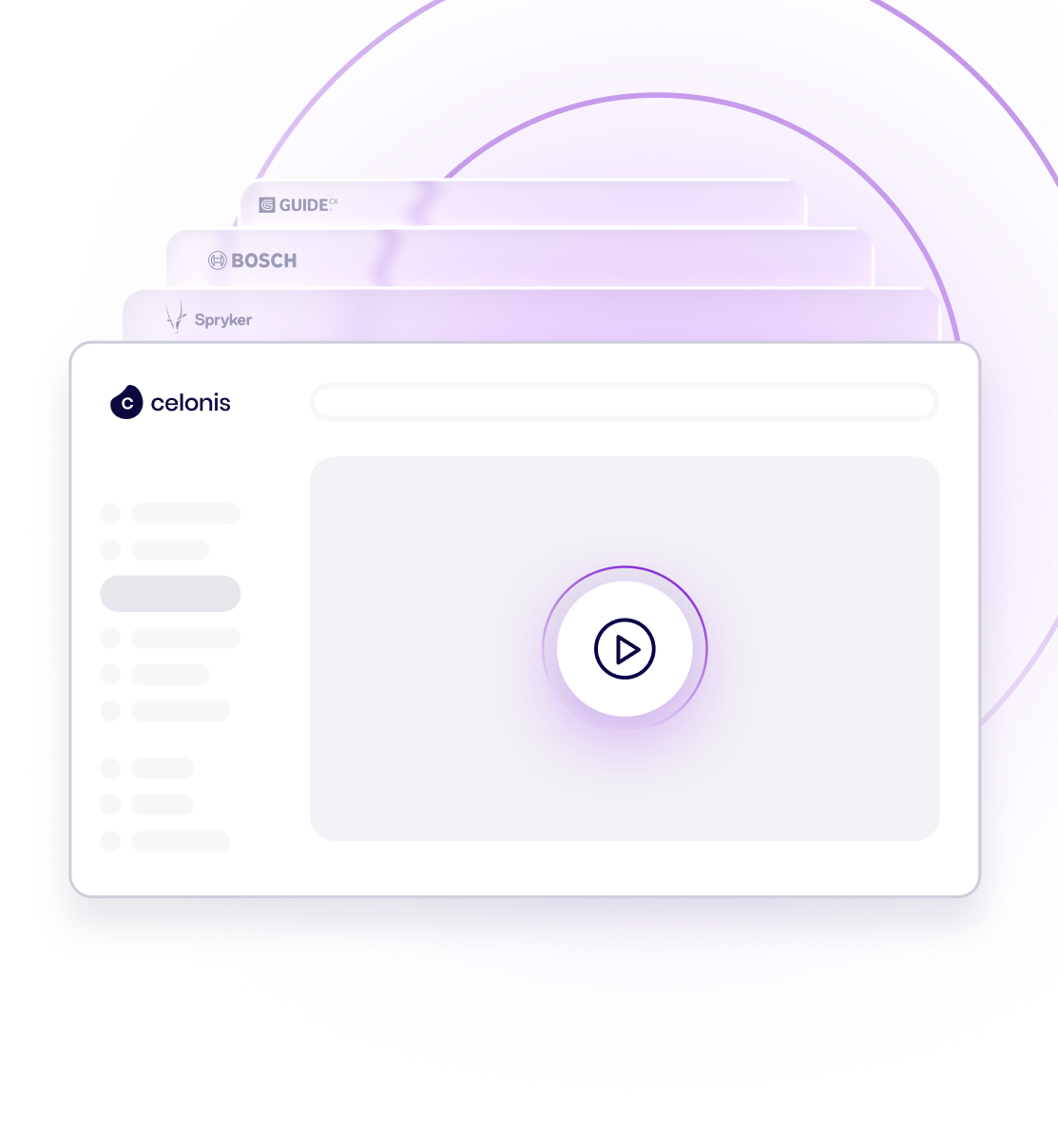
This is a live interactive demo — not a video. Click through to see how engagement data surfaces in real time, the way your buyers would experience it.
Liked what you saw?
Book a 30-min callThe category is moving fast, and genuine progress is being made. But some of the language being used to describe what these tools do has moved ahead of what they actually deliver today.
The term "AI agent" is the most consistently stretched in the category. A chatbot is primarily designed to respond to messages. An AI agent is designed to take action toward a goal — proactive, multi-step, triggering actions across systems without human input. In a B2B sales context, a true agent wouldn't just answer "Does this integrate with Salesforce?" — it would identify which demo the visitor watched, score their intent, enrich the account in the CRM, route the lead to the right rep, and trigger a personalized follow-up sequence.
By that definition, most of what the demo software market is calling "AI agents" today are, in practice, sophisticated chatbots. They answer questions from a pre-indexed knowledge base, surface relevant demo content in response to what a visitor asks, and route to a human when the conversation gets complicated. The system responds to what the viewer asks; it does not act on what it infers about the viewer.
The clearest illustration of where the category currently sits: one leading vendor, when asked directly, acknowledged it "can't actually write your answers into the demo data." A chatbot that opens demo content in a side window, based on what a visitor explicitly asks, is useful as a distribution mechanism. It is not the same as an agent that asks discovery questions, infers what the buyer needs, and presents a demo personalized to that buyer's situation.
Several vendors claim their AI can generate demo flows — stitching together screens, creating transitions, building a narrative — from scratch. The reality is more constrained. True "generative stitching," where an AI creates non-existent screens to bridge gaps, is still largely a myth. The market has moved toward AI-Assisted Sequencing — helping you organize and smooth existing captures — rather than true generation of new product UI.
This distinction matters enormously when you're evaluating vendor claims. "AI generates your demo" usually means "AI helps you organize your screen captures more efficiently." That's genuinely useful. It's not the same thing.
The dream is a demo that automatically adapts to every prospect — their industry, role, pain points, and company context — with no human input. The reality: most "personalization" in demo software today means swapping variable text fields (company name, industry label, a few numbers) rather than dynamically restructuring the demo narrative or highlighting genuinely different features for different personas. True personalization — where the flow, depth, and emphasis of a demo genuinely changes based on who's watching — still requires human judgment to set up, even if AI can then execute it at scale.
A question worth asking directly: can you just use a general-purpose AI like ChatGPT or Claude to create demos, without a dedicated tool? The answer is yes, for specific tasks — and more capably than most presales teams realize. But not as a replacement for demo software.
What general-purpose AI does well for demo creation: scripting and narrative, synthetic data content, persona-specific talk tracks, and extracting insight from call recordings. Feed Claude your product documentation, a discovery call transcript, and the prospect's LinkedIn profile, and ask it to draft a demo narrative built around the three pain points the prospect actually mentioned. The output is often better-structured and more prospect-specific than what an SE would write from memory under time pressure.
What general-purpose AI cannot do: capture your product interface, build an interactive click-through experience, inject synthetic data into your actual demo environment, track whether a prospect watched the demo, surface buying signals, or connect any of that to your CRM. Everything it produces is text — useful text, often excellent text — but text that requires a separate tool to become a demo.
The workflow that actually works: use Claude or ChatGPT upstream — for research, scripting, data content, and narrative structure. Bring that output into dedicated demo software for production, personalization at scale, distribution, and analytics. The two are not competing; they serve different stages of the same workflow.
AI in demo creation is real and is genuinely accelerating how teams build and deliver product experiences. The speed gains in production are documented. The engagement analytics create real pipeline intelligence. The synthetic data capabilities reduce prep time for personalized demos from hours to minutes.
But the marketing narrative has run well ahead of the technical reality. Most "AI agents" are assistants. Most "generative" demos are organized captures. Most "full personalization" is variable substitution. The real value isn't autonomy — AI doing the job for you. It's flow — AI keeping you in the zone.
The teams winning with AI in their demo programs are the ones who understand this distinction. They use AI to amplify great sales judgment, not to replace it. The vendors worth working with are the ones who are honest about the same distinction.
Book a live demo to see how Demoboost helps your team cut demo prep time, qualify buyers faster, and focus on real opportunities.
Book a Live Demo

.png)
.png)
