Wait! Before You Leave…
Not sure how interactive demo will work best for your business? We can guide you!
Not Ready Yet? Check out our Interactive Demo report.

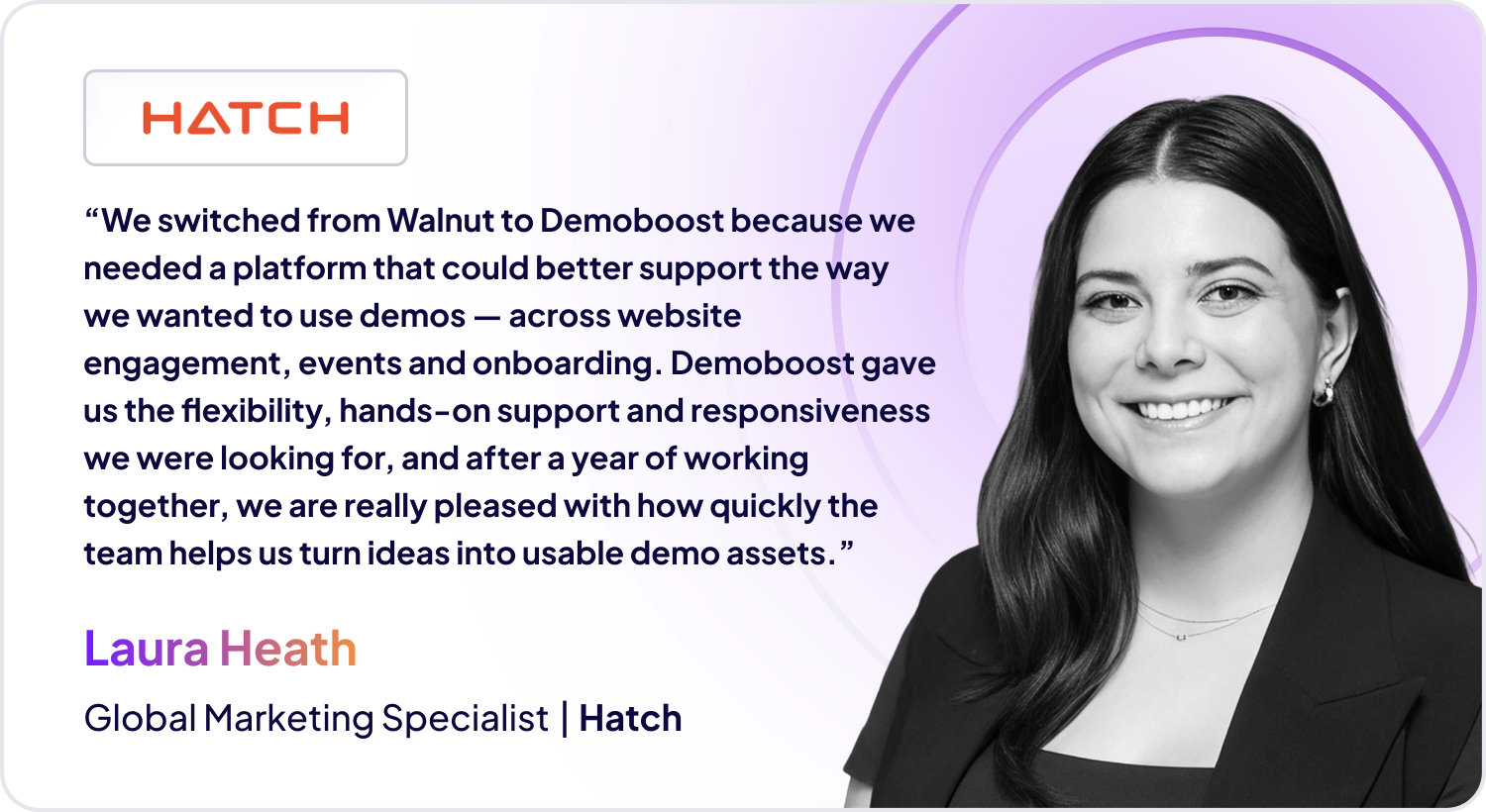

Hatch needed a better way to bring its HITM tailings product to life.
As a global engineering and professional services organisation, Hatch works on complex projects across mining, infrastructure and energy. Its software solutions solve highly specialised problems — but that also means they can be difficult to explain quickly to new prospects, event attendees or early-stage buyers.
The team wanted to move beyond telling people what the product could do. They wanted to show it.
At first, one of the key use cases was events. Hatch wanted prospects to interact with the product at conference booths, explore the experience themselves, and leave with a clearer understanding of the value. But their previous demo setup did not support that use case reliably. The experience depended too heavily on conference Wi-Fi, and lead capture did not work as expected.
More importantly, Hatch realised they needed a demo solution that could support more than one moment in the journey.
They needed demos that could:
Hatch did not need a replacement for deep technical demos led by mining experts. Those advanced conversations still belonged in the live product with the right specialist in the room.
What they needed was a scalable way to create interest earlier, explain the product faster, and guide buyers and users through the journey before and after the sale
.png)

We wanted to show, not tell. People do not always want another conversation about what the platform can do. They want to see it, understand it and play with the experience themselves.
Hatch chose Demoboost to create a more flexible and scalable demo programme.
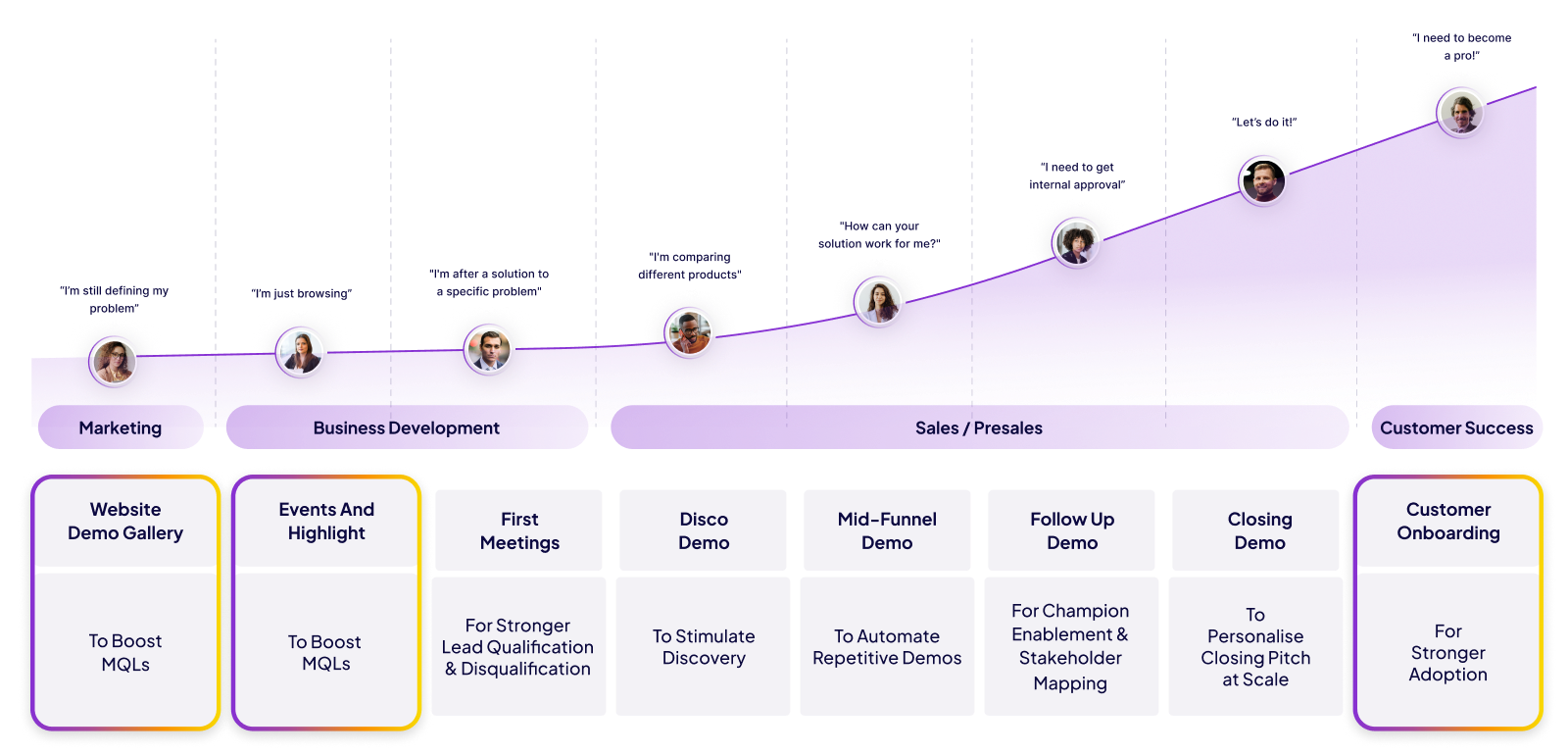
The goal was not to build one static product tour. It was to create a set of demo assets that could support multiple use cases across the buyer and user journey — from website education, through events, to onboarding.
Demoboost worked with Hatch to understand the HITM product, map the right demo flow, and build the first demo experience collaboratively.
Initially, Hatch considered creating three demo versions: one high-level, one more technical, and one in the middle. Together with Demoboost, the team focused first on the version that would create the most immediate business value: a website demo that could educate early-stage prospects and help them understand the product before engaging with the team.
This became the foundation for Hatch’s demo programme.
The first major use case was the Hatch website.
The team added the Demoboost demo to the landing page, giving visitors a direct way to experience the product before booking a meeting or speaking to a regional business development manager.
This helped Hatch move product education earlier in the funnel.
Instead of relying only on written content, static visuals or a sales conversation, prospects could see how the product worked and decide whether they wanted to learn more.
The website demo quickly became Hatch’s most popular demo asset. It also gave the team useful engagement data, helping them understand who was watching and how prospects were interacting with the experience.
Most importantly, the demo started prompting action. Some visitors did not just enter their email. They took the next step and contacted the team directly after engaging with the demo.
Hatch also used Demoboost to support conference activity.
Rather than relying on an offline demo experience in environments where Wi-Fi could be unpredictable, the team adapted the demo into short video-style assets that could run at the booth.
The videos were created in both English and Spanish, supporting Hatch’s activity across North and South America.
Each video was around two minutes long — short enough for people to watch at a booth, but long enough to create curiosity and prompt a conversation.
This gave Hatch a practical way to use demos at events: not as a replacement for the sales team, but as a visual conversation starter.
The demo helped people understand the product faster, while giving the Hatch team a natural way to approach visitors, answer questions and continue the conversation.
As Hatch’s use of Demoboost grew, the team identified another high-value use case: onboarding.
Hatch began building a collection of onboarding demos for new HITM users. The demos were structured by module, making it easier for users to learn the product in smaller, more focused steps.
The team used Demoboost features such as voiceover, autoplay, pause and play functionality to create an experience that felt close to a video, while still being built from modular demo content.
This gave Hatch a scalable way to support new users as they learned the system.
Instead of relying only on live training, documentation or repeated walkthroughs, Hatch could share guided product experiences that new users could access when they needed them.
The onboarding demos are expected to play an important role as Hatch rolls out HITM to its first major client users.
One of the biggest benefits for Hatch was the support behind the platform.
Demoboost did not just provide the software. The team helped Hatch shape the demo, refine the structure, understand what was possible, and build the first assets.
That support was especially valuable during the early stages, when Hatch was still learning how to structure demos and how to use the platform independently.
Laura highlighted the importance of having a detailed brief — including the screens, flow, features and key messages — and how Demoboost helped turn that into a working demo experience.
Demoboost also helped Hatch become more self-sufficient over time.
After the first demos were built with hands-on support, Laura and the team were able to start editing and creating demos themselves.
With Demoboost, Hatch created a scalable demo experience that now supports multiple stages of the buyer and user journey.
The team moved from experimenting with demo automation to building a practical demo programme across website engagement, events and onboarding.
1. Website demo became the main product education asset
2. Conference demos created better event conversations
3. Modular onboarding demos supported new users
4. The team could iterate as the product evolved
5. Hatch gained a demo partner, not just a platform